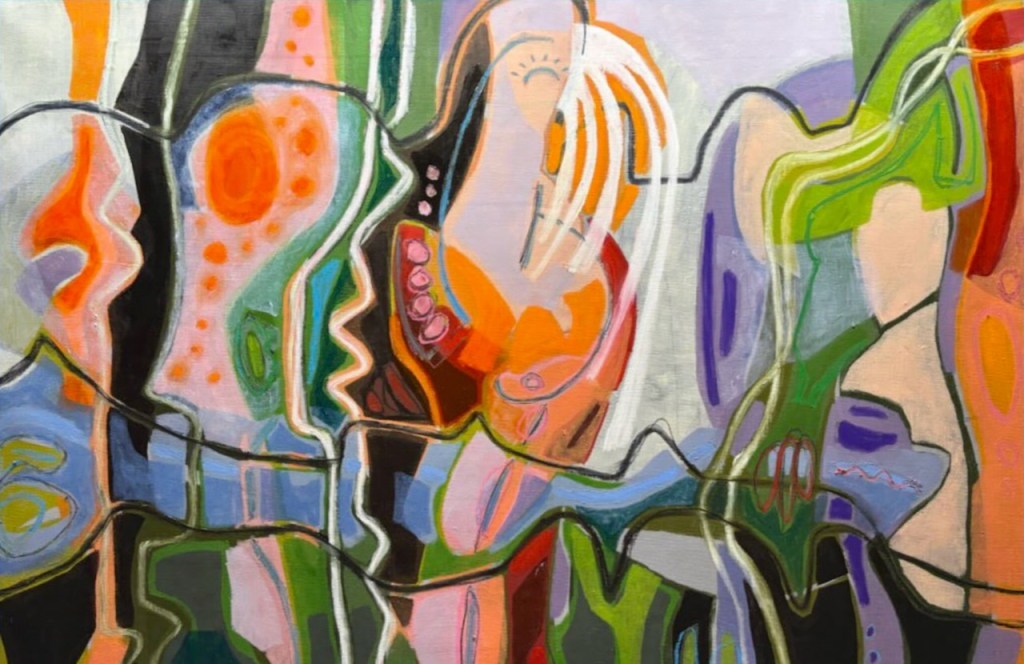
My friends have organised an exotic Camel ride so that we can explore the Topography of Mind, and I hope you will join us. We will be following in the footsteps of recent prog rock explorers and guided by a map supplied by the Israeli band, Telegraph. They are:
- Avi Barak: Drums and Flute
- Liran Herrnstadt: Bass and Vocals
- Eze Sakson: Keyboards & Synths
- Tal Rubinstein (Stein): Guitars and backing vocals
The phrase “topography of mind” refers to an early psychological theory by Sigmund Freud. In his book The Interpretation of Dreams (1900), Freud identifies three levels of awareness: Conscious, Preconscious and Unconscious. The conscious mind holds what we are thinking about now; the preconscious is what we can think about if we choose (ordinary memories); the unconscious is those thoughts we are unable to access (lost or repressed memories). I have my doubts about how useful that is, but it provides a solid jumping off point for Telegraph‘s second album release.
There are four tracks on the album, all about 11 minutes long. The title track comes first; it serves as the topographical map and introduces us to the ship of the mind desert that will carry us throughout our journey. The animal is every bit as friendly as the Canterbury Camel we knew years ago, and it sets off at a pleasant ambling pace. Soon we come to a Field of Fade Memory where vivid images of a Snow Goose bubble up and permeate the mind’s eye. They may be fuzzy and faded, but they are still much-treasured memories. The scenes shimmer and shift as we enter the Valley of Delirium, but we are not ill. We have simply entered a drug-free mind-expanding soundscape. And yet, something is bothering us. As the camel train winds its way over arid dunes, we can’t help feeling that Somewhere Along These Lines something isn’t right. A voice at the back of our minds is calling to us, but we can’t quite hear it.
The whole album could be a lost memory of mid-seventies prog rock expeditions. They were carefree days. This reminder is much more than mere nostalgia, though; it is a thoroughly effective salve for the bumps and bruises that modern life inflicts on us. Or, as one reviewer put it:
In an ever increasingly noisy, agitated and nervy universe, this kind of soothing balm is a gift from heaven above, an album I intend to revisit whenever the stress reappears and my tired bones need a sonic caress.
rogue, House of Prog

 Crotchety Man