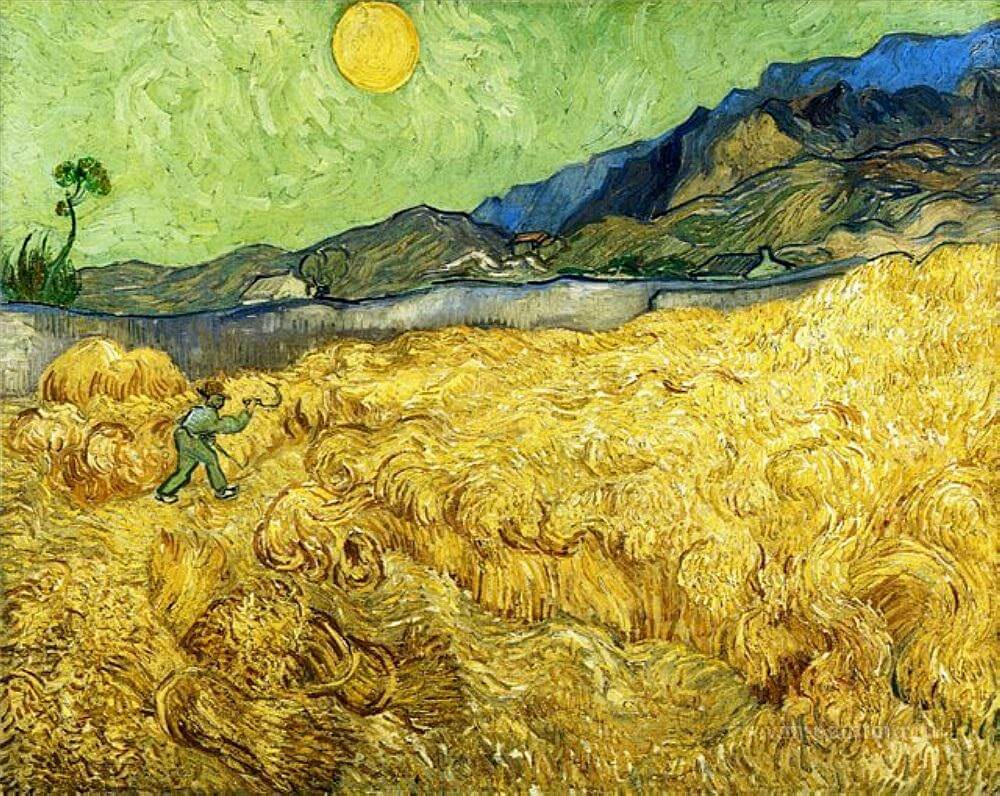
Seen through the eyes of Vincent van Gogh, wheat is a vibrant yellow. More often, though, when we see yellow fields, we are looking at the flowering heads of canola, the plant whose seeds are the third-largest source of vegetable oil in the world according to Wikipedia. Although I had seen those crops many times before, I didn’t know what they were called until I was sent on a pre-sales visit to a potential customer. The gentleman in question was a farmer out in the countryside, some 20 miles north of the city of Newcastle. Now, I am a city boy, brought up in a London council flat, and I had no idea what sort of people owned and managed arable farms. It was also the first time I had been on a sales call.
When I parked the car at the customer’s large modern farmhouse, I was, unsurprisingly, nervous. As I stepped through the front door, I found myself on a wide landing, looking out onto a vast open-plan living and dining area half a floor below. Roof beams of polished, stained oak, sharp and modern, grabbed my attention immediately. Both upstairs and down, every architectural detail of the house spoke of craftsmanship and opulence. And the furniture and fittings were just as impressive. It was like entering one of the buildings featured in the TV program, Grand Designs. I was awestruck.
Over a working lunch, the conversation touched on the fields full of yellow flowering plants that we had seen on our way to the farm. This prompted our host to say something about ‘rape’. “Well, I guess these people have very different ways”, I thought, “but, surely, this isn’t a suitable topic for polite conversation during a business meeting”. And then I realised that ‘rape’ has another meaning – it is a species of plant cultivated for its oil.
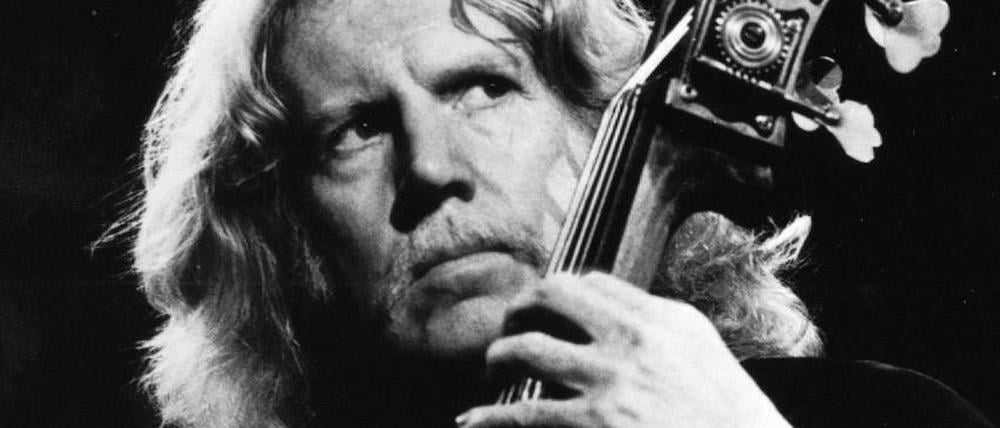
I don’t know if Eberhard Weber named his 1975 album Yellow Fields after the plants with the oily seeds, but he must have been in a calm and peaceful mood when that was conceived and recorded because it oozes a relaxed contentment. The local style council describes it as ambient jazz. It reminds me of Neil Ardley’s work (see this earlier post) and some of the more laid-back Weather Report tunes.
Weber was born in the German city of Stuttgart in January 1940. He started playing the cello at the age of 6, took up the double bass as his primary instrument at 16, and began his professional career in the early 1960s. He formed his own band, Colours, in the 1970s with Charlie Mariano (saxophones), Rainer Brüninghaus (piano, synthesiser) and Jon Christensen (drums). Over the following three decades, he worked with many acclaimed jazz musicians, including guitarists Joe Pass and Pat Metheny, violinist Stéphane Grappelli, vibraphonist Gary Burton, and saxophonist Jan Garbarek.
But Weber was never just another jazz bassist. He incorporated classical sensitivities into his compositions. He was an early proponent of the solid-body electric upright bass, adding a fifth and sixth string. And he played on four of Kate Bush’s last six albums. Great musicians rarely confine themselves to just one musical style.
Herr Weber is now 86. He suffered a stroke in 2007 and has not played in public since then. He has not been forgotten, though. In 2009, ECM re-released three of his albums, including Yellow Fields, as the 3-CD compilation, Colours. That would be a fine tribute to the man, I think, when the grim reaper finally comes for him.
 Crotchety Man
Thank you for this tribute. Eberhard Weber is one of the greatest. I saw him live playing in Darmstadt in the late 80’s. Amazing what the bass means to jazz music.
LikeLiked by 1 person